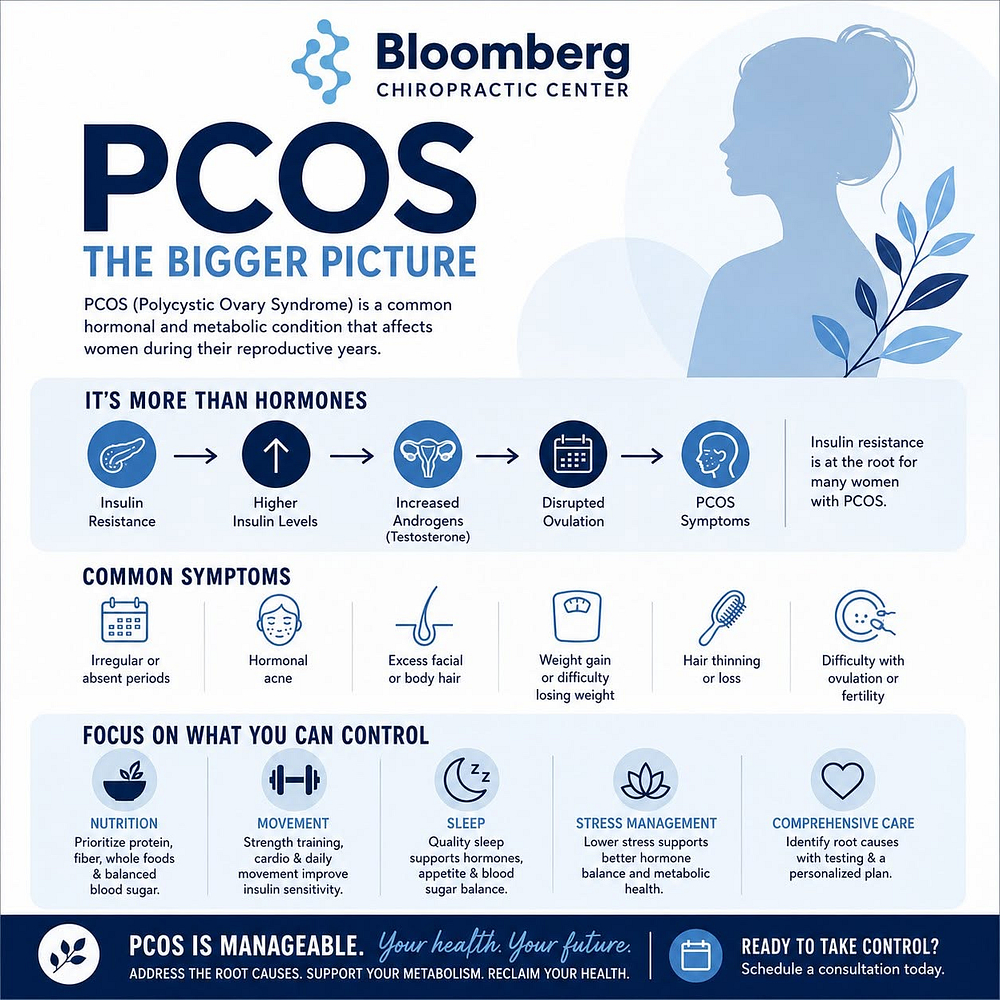
Polycystic ovary syndrome (PCOS) is often described as a hormonal disorder—but that description doesn’t tell the whole story. PCOS is closely connected to metabolic health, including insulin regulation, blood sugar balance, body composition, inflammation, and cardiovascular risk. For many women, improving metabolic health can be an important part of addressing the underlying drivers of PCOS symptoms. Understanding this connection can change the way PCOS is approached.









What Is PCOS?
PCOS is a common endocrine and metabolic condition that can affect women during their reproductive years. Symptoms can vary considerably from one woman to another, but may include:
- Irregular or absent menstrual cycles
- Difficulty with ovulation or fertility
- Acne
- Increased facial or body hair
- Hair thinning or loss
- Weight gain or difficulty losing weight
- Increased abdominal fat
- Elevated androgen levels
Importantly, not every woman with PCOS has cysts on her ovaries, and not every woman with ovarian cysts has PCOS. PCOS is typically diagnosed based on a combination of clinical history, physical findings, laboratory testing, and sometimes ultrasound.
The Insulin-Resistance Connection
One of the most important links between PCOS and metabolic health is insulin resistance. Insulin is a hormone that helps move glucose from the bloodstream into cells to be used for energy. When the body becomes less responsive to insulin, the pancreas may compensate by producing more insulin. This is called hyperinsulinemia. Higher insulin levels can contribute to PCOS in several ways. Insulin can stimulate the ovaries to produce more androgens—hormones such as testosterone. At the same time, insulin resistance can affect the liver’s production of sex hormone-binding globulin (SHBG), potentially increasing the amount of biologically active testosterone circulating in the body. The result can be a combination of:
Insulin resistance → higher insulin → increased androgen activity → disrupted ovulation → PCOS symptoms
This is one reason why simply focusing on reproductive hormones may not address the entire picture.
PCOS Can Affect Metabolic Health
The relationship also works in the opposite direction. PCOS is associated with a greater risk of metabolic problems, including:
- Insulin resistance
- Prediabetes and type 2 diabetes
- Abnormal cholesterol and triglycerides
- Increased visceral fat
- Metabolic syndrome
- Cardiovascular disease risk
This doesn’t mean that every woman with PCOS will develop these conditions. However, PCOS can be an important reason to pay closer attention to metabolic markers.
Why “Normal” Blood Sugar May Not Tell the Whole Story
One of the challenges in evaluating metabolic health is that blood glucose can remain normal for years while insulin levels are rising. The body may compensate for insulin resistance by producing more insulin. As a result, fasting glucose may still look perfectly normal. For this reason, a more comprehensive metabolic assessment may include:
- Fasting glucose
- Fasting insulin
- Hemoglobin A1c
- Lipid panel
- Triglycerides
- HDL cholesterol
- Blood pressure
- Waist circumference
- Liver enzymes
- Additional hormone testing when appropriate
In some cases, calculating HOMA-IR using fasting glucose and fasting insulin can provide another perspective on insulin sensitivity. The goal isn’t simply to identify disease. It’s to recognize metabolic dysfunction early—before more significant problems develop.
Body Composition Matters
PCOS isn’t simply a “weight problem.” Women with PCOS can have a wide range of body sizes, including women who are not overweight. However, visceral fat—fat stored around the abdominal organs—can be particularly relevant to metabolic health. Two people can have the same body weight but very different amounts of muscle, subcutaneous fat, and visceral fat. That’s why looking beyond the number on the scale can be valuable. Strength training, adequate protein intake, regular physical activity, sleep, and nutrition can all play important roles in improving body composition and metabolic health.
Nutrition and PCOS
There is no single “PCOS diet” that works for everyone. Instead, the focus should generally be on improving metabolic health while creating an eating pattern that is sustainable. Helpful strategies may include:
Prioritize protein
Adequate protein can support muscle maintenance, satiety, and healthy body composition. Good sources include:
- Eggs
- Fish
- Chicken and turkey
- Lean beef
- Greek yogurt
- Cottage cheese
- Tofu and tempeh
- Legumes
Increase fiber
Fiber can help support satiety, digestive health, and healthy glucose regulation. Focus on vegetables, berries, legumes, nuts, seeds, and minimally processed whole grains as appropriate.
Choose carbohydrates strategically
Carbohydrates don’t necessarily need to be eliminated. Instead, emphasize minimally processed carbohydrate sources and combine them with protein, fiber, and healthy fats to help promote a more favorable glucose response.
Reduce highly processed foods
Frequent consumption of foods high in refined carbohydrates, added sugars, and highly processed fats can make metabolic health more difficult to manage. The goal is not perfection. It’s consistency.
Exercise Is Medicine for Metabolic Health
Physical activity is one of the most effective tools for improving insulin sensitivity. A combination of: resistance training + aerobic activity + daily movement can be particularly beneficial. Resistance training helps build and maintain muscle, and skeletal muscle is one of the body’s major sites for glucose disposal. Even something as simple as walking after meals can help support glucose regulation.
Don’t Forget Sleep and Stress
Metabolic health isn’t just about food and exercise. Poor sleep and chronic stress can influence:
- Cortisol
- Appetite
- Insulin sensitivity
- Food cravings
- Blood sugar regulation
- Body composition
Women with PCOS may also experience sleep problems, including a higher risk of obstructive sleep apnea in some populations. Addressing sleep quality and stress management should therefore be part of a comprehensive approach.
A Functional Approach to PCOS
A conventional approach may focus primarily on controlling symptoms—for example, regulating menstrual cycles, treating acne, or addressing fertility. Those interventions can be appropriate and valuable. A functional approach asks an additional question: “Why are these symptoms occurring?” That may involve looking at several interconnected systems:
Metabolic health
↓
Insulin sensitivity and glucose regulation
↓
Ovarian androgen production
↓
Ovulation and menstrual cycles
↓
Symptoms such as acne, hair growth, and fertility challenges
This doesn’t mean that every symptom of PCOS is caused by insulin resistance. PCOS is complex, and different women can have different underlying drivers. The goal is to identify the individual factors contributing to a patient’s symptoms and metabolic risk.
The Bottom Line
PCOS isn’t simply a reproductive or hormonal condition. It is closely connected to metabolic health, and insulin resistance can play an important role for many women with PCOS. Rather than focusing exclusively on individual symptoms, a comprehensive approach should consider the bigger picture:
Blood sugar + insulin + hormones + body composition + nutrition + exercise + sleep + stress
Improving metabolic health may help address some of the underlying physiology associated with PCOS while also supporting long-term health. If you have PCOS—or suspect that you may have it—consider discussing a comprehensive metabolic and hormonal evaluation with your healthcare provider. Your hormones don’t operate in isolation. Your metabolism, lifestyle, and hormonal health are all connected.