“I’ve lived too long, but I lived well.” Words from Charlie Sweitzer, 46-year resident of
Champaign, who died October 11, 2021, thirteen months to the day after the death of his wife
Phyllis, his unheralded, lifelong partner in endeavors important to them both. They leave
bereaved their sons John and Scott, granddaughter Laney, and innumerable friends, neighbors,
and colleagues. At this time, no service for Charlie has been planned.
Charlie was born on June 1, 1935 in Howe, Indiana and grew up with Amish friends and
neighbors. He attended McCormick Theological Seminary in Chicago and then ministered at
Presbyterian churches in Newton, Oregon, and Champaign, Illinois.
After an early childhood thyroid deficiency rendered Charlie incapable for several years of
normal communication with others, once diagnosed and treated he devoted the remainder of
his life connecting with people in his various professional and personal activities.
For more than 20 years until 1996, he was a pastor at McKinley Presbyterian Church and
Foundation in Champaign, where he directed many programs to assist others in the community.
He helped found the Men’s Emergency Shelter as well as the Thumbs-Up program to offer
student travelers a place to sleep as they passed through town. Under Charlie’s direction,
McKinley hosted space for the Gay Community AIDS Project, a health support system begun
during the beginning of AIDS Crisis. He was actively involved with the founding of the local
PFLAG – Parents and Friends of Lesbians and Gays.
Community members looking for a venue to host a gay consciousness awareness group were
turned away from other churches, but Charlie and McKinley provided a welcoming and
nonjudgmental space for connections to be made and ideas to flow. Out of his strong belief in
the justness of it, Charlie performed same-sex marriages for twenty years before Illinois state
law recognized the unions, and many of the couples were of faiths where their union was not
sanctioned.
Charlie coordinated and assisted with the Sanctuary Movement of the 1980s, an inter-
denominational religious and political campaign involving 500 U.S. churches, including McKinley
Presbyterian, that declared their churches as sanctuaries for people fleeing violence and
persecution as a result of the civil wars in Central America. The member churches and
supporting citizens acted in defiance of and opposition to federal laws that they believed were
being violated by their government in denying asylum to persecuted individuals.
Charlie, along with Reverend Jack Diel from United Campus Ministries in Terre Haute, IN and
their Mexican colleague Reverend Ramon Celis, formed the Intercambio program, which served
rural and urban Mayan communities in the Yucatan Peninsula for more than 20 years. The
program took Americans to Mexico twice a year, during the summer and winter holidays, and
the volunteers worked on projects determined by the individual communities: building
community centers and churches; adding a second story to the Downs Syndrome Institute in
Merida, Yucatan; and holding clinics for dental, eye, and health care.








The main purpose of Intercambio was not service to others but cultural exchange. Intercambio
provided Americans of all ages the opportunity to interface with people throughout various
parts of the Yucatan. Hundreds of Americans participated in Intercambio, living with village
locals in their homes and eating meals prepared by local cooks. The trips offered experiential
learning that bridged national, racial, and cultural boundaries.
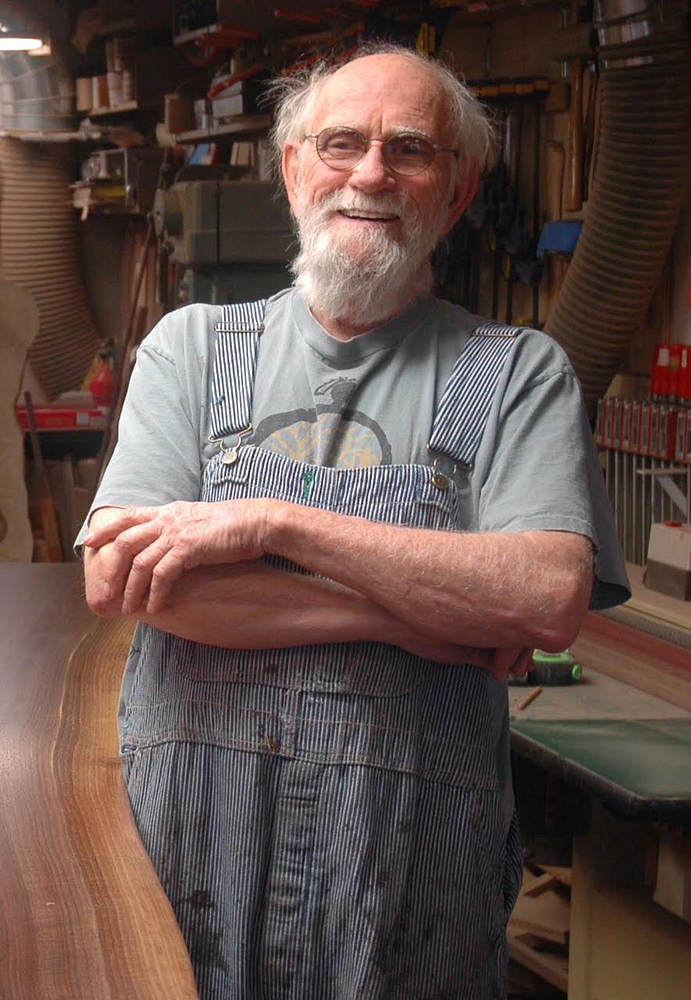
Charlie pursued many artistic endeavors throughout his life. He was an amateur blacksmith and
sculptor and a professional leathersmith and chairmaker. After he retired from McKinley in
1996, seeking more tangible results from his labor, he took up chairmaking. He studied Shaker
chairmaking with Peter Hindle in England and green wood chair-building techniques with Brian
Boggs. He also studied Shaker box-making with John Wilson in Charlotte, Michigan.
Under the Sweitzer & Sweitzer Furnituremakers partnership with his son John, Charlie
fabricated Shaker chairs and tables, Shaker boxes, and cutting boards that he sold at shows and
exhibits throughout the Midwest. Working almost exclusively with native species – cherry,
walnut, maple, ash, hickory – he combined colors of wood that gave a richness to the final piece
and made his work highly desirable. The door to the workshop was always open and visitors
stopped by regularly. Woodworking satisfied his need to be creative and gave him the vehicle
to interact with visitors and artisans throughout the Midwest. Woodworking also allowed him
to work in the shop with his son and fellow furnituremaker, John, for which he felt himself
blessed.
He and Phyllis hosted holiday gatherings for folks with nowhere to celebrate and
internationals who had never experienced American Thanksgiving or our other
traditions. To be more culturally accommodating, they blended vegetarian and
traditional holiday dishes, which made for the most unusual meals. But it was the
welcoming and sharing that was important.
Charlie was clever and critical and suffered no fools. He was inordinately curious. He
loved the beauty of his amaryllis, the clever design of a new Alessi cafetière, the artistry
of an Amish straw hat hand-crafted just for him, and old photos of Paris street scenes.
Charlie had a deep-seeded need and uncanny ability to connect with other people.
Whether he was negotiating food purchases in the markets of Cancun to feed a
hundred Intercambio volunteers, buying a melon in a street market in Italy, or
welcoming a nine-year old French girl into his home, lack of common language was not
an obstacle for Charlie or for those he encountered.
Charlie was instrumental in the 1980 creation of The Refugee Center. He was on the original
board of directors of the nonprofit and was one of three signers on its incorporation papers.
Memorial donations in the name of Charlie and Phyllis Sweitzer can be made to The Refugee
Center at www.therefugeecenter-cu.org or by mailing contributions to 201 W Kenyon Rd, Suite
4D, Champaign, IL 61820. Call 217.344.8455 for additional information.
Charlie was a rebel and a legend, and to all of those in his wide circle of family, friends,
colleagues, and casual acquaintances, eighty-six years were not nearly enough.