Mitochondria are often called the “powerhouses” of the cell because they convert nutrients (mainly glucose and fat) into ATP, the energy your body uses to function. As we age, mitochondrial function can decline—meaning they produce less energy and generate more oxidative stress, contributing to fatigue, slower metabolism, and even chronic disease.








Why mitochondrial function declines with age:
• Accumulated oxidative damage (from free radicals)
• Decreased mitochondrial biogenesis (making new mitochondria)
• Less physical activity and nutrient support.
• Hormonal changes that affect energy production. (Look into DUTCH testing to get a complete understanding of hormone metabolism)
Ways to support and boost mitochondrial (Metabolism) function:
1. Exercise regularly – Especially interval training and strength training, which both stimulate the creation of new mitochondria (mitochondrial biogenesis).
2. Get quality sleep – Mitochondria repair and regenerate during deep sleep. 3. Eat antioxidant-rich foods – Berries, leafy greens, and other colorful veggies help reduce oxidative stress.
4. Supplement smartly – Nutrients that support mitochondrial health include: • CoQ10 – Essential for ATP production and an antioxidant
• Alpha-lipoic acid – Supports energy production and combats oxidative damage • Acetyl-L-carnitine – Helps transport fatty acids into mitochondria for fuel • Magnesium – A cofactor in hundreds of cellular processes, including energy production
• Glutathione – The body’s master antioxidant that protects mitochondria from damage
5. Try intermittent fasting or time-restricted eating – These strategies can activate cellular processes (like autophagy) that improve mitochondrial efficiency. 6. Cold exposure or heat therapy – Things like cold plunges or sauna use may stimulate mitochondrial adaptations and detox pathways.•
7. Build muscle with strength training – Muscle burns more calories at rest than fat, so increasing lean muscle mass helps boost resting metabolic rate.
8. Prioritize protein in your diet – Protein has a high thermic effect, meaning your body burns more calories digesting it compared to fats or carbs.
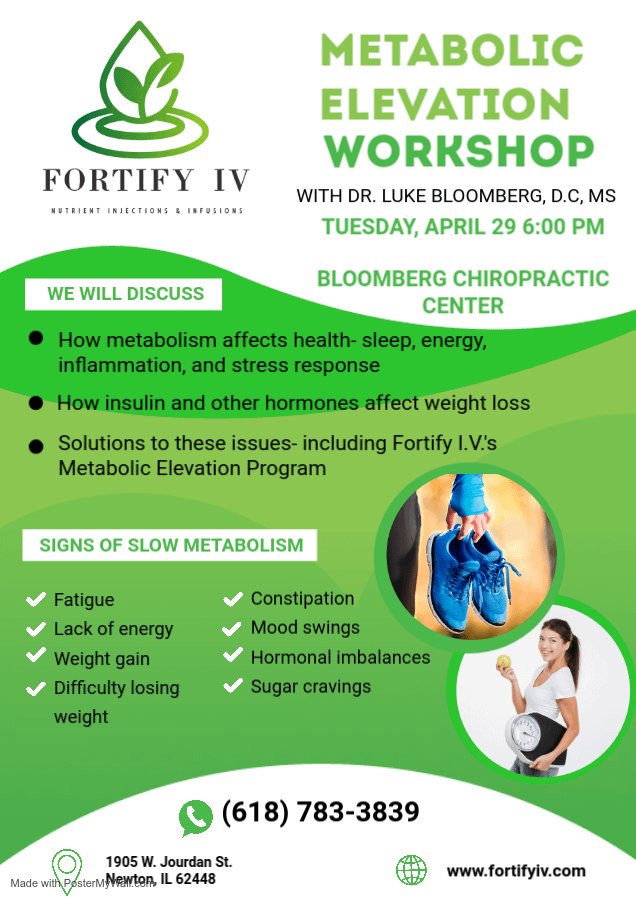
Join us for the Metabolic Elevation Workshop on Tuesday, April 29, at 6:30 pm to learn more about maximizing your metabolism. Contact Bloomberg Chiropractic Center 618-783-2424 if you have any questions.
How in the World Do I Increase My Metabolism
Mitochondria are often called the “powerhouses” of the cell because they convert nutrients (mainly glucose and fat) into ATP, the energy your body uses to function. As we age, mitochondrial function can decline—meaning they produce less energy and generate more oxidative stress, contributing to fatigue, slower metabolism, and even chronic disease.
Why mitochondrial function declines with age:
• Accumulated oxidative damage (from free radicals)
• Decreased mitochondrial biogenesis (making new mitochondria)
• Less physical activity and nutrient support.
• Hormonal changes that affect energy production. (Look into DUTCH testing to get a complete understanding of hormone metabolism)
Ways to support and boost mitochondrial (Metabolism) function:
1. Exercise regularly – Especially interval training and strength training, which both stimulate the creation of new mitochondria (mitochondrial biogenesis).
2. Get quality sleep – Mitochondria repair and regenerate during deep sleep. 3. Eat antioxidant-rich foods – Berries, leafy greens, and other colorful veggies help reduce oxidative stress.
4. Supplement smartly – Nutrients that support mitochondrial health include: • CoQ10 – Essential for ATP production and an antioxidant
• Alpha-lipoic acid – Supports energy production and combats oxidative damage • Acetyl-L-carnitine – Helps transport fatty acids into mitochondria for fuel • Magnesium – A cofactor in hundreds of cellular processes, including energy production
• Glutathione – The body’s master antioxidant that protects mitochondria from damage
5. Try intermittent fasting or time-restricted eating – These strategies can activate cellular processes (like autophagy) that improve mitochondrial efficiency. 6. Cold exposure or heat therapy – Things like cold plunges or sauna use may stimulate mitochondrial adaptations and detox pathways.•
7. Build muscle with strength training – Muscle burns more calories at rest than fat, so increasing lean muscle mass helps boost resting metabolic rate.
8. Prioritize protein in your diet – Protein has a high thermic effect, meaning your body burns more calories digesting it compared to fats or carbs.
Join us for the Metabolic Elevation Workshop on Tuesday, April 29, at 6:30 pm to learn more about maximizing your metabolism. Contact Bloomberg Chiropractic Center 618-783-2424 if you have any questions.