Title: The Link Between Thyroid Function and Estrogen in Women
Hormone balance is critical for women’s health, and two of the most influential players in this delicate
hormonal orchestra are thyroid hormones and estrogen. These two systems are intricately connected, and
when one becomes imbalanced, the other often follows suit. Understanding this relationship is key to
unlocking solutions for fatigue, weight fluctuations, menstrual irregularities, infertility, and mood
disturbances.
Let’s explore how estrogen and thyroid function are interconnected—and what that means for your health.








- Thyroid Hormones 101
The thyroid gland, located in the neck, produces hormones that regulate metabolism, temperature, energy
production, and brain function. The key hormones are:
● T4 (thyroxine): The inactive form.
● T3 (triiodothyronine): The active form that drives cellular metabolism.
● TSH (thyroid-stimulating hormone): A pituitary hormone that tells the thyroid how much
hormone to make.
Proper thyroid function depends on nutrient availability (like iodine, selenium, and zinc), but it also
depends on hormonal balance—especially estrogen. - Estrogen’s Impact on Thyroid Function
Estrogen plays several critical roles in how thyroid hormones are produced, activated, and utilized:
A. Estrogen Increases Thyroid-Binding Globulin (TBG)
Estrogen—especially in high amounts—stimulates the liver to produce thyroid-binding globulin (TBG).
TBG binds to thyroid hormones in the blood, making them inactive until released.
➡️ More estrogen = more TBG = less free T3 and T4 available for cells.
This can create symptoms of low thyroid function (hypothyroidism) even when total thyroid hormone
levels appear “normal” on lab tests. Women on oral contraceptives or hormone replacement therapy (HRT)
may experience this effect.
B. Estrogen Affects T4-to-T3 Conversion
Thyroxine (T4) must be converted to active T3 to have metabolic effects. Estrogen dominance,
inflammation, or liver congestion can reduce this conversion, leading to a functional thyroid slowdown.
C. Estrogen Dominance Mimics or Masks Hypothyroid Symptoms
When estrogen is high relative to progesterone (a state called estrogen dominance), it can cause symptoms
that overlap with hypothyroidism:
● Fatigue
● Weight gain
● Hair thinning
● Depression
● Brain fog
● Cold sensitivity
This hormonal overlap can delay diagnosis or lead to inadequate treatment.
- Thyroid Dysfunction Can Disrupt Estrogen Balance
The relationship goes both ways. Low thyroid function can:
● Slow liver detoxification of estrogen, leading to estrogen build-up.
● Alter ovarian function, affecting progesterone production.
● Contribute to anovulatory cycles (cycles without ovulation), which further suppress progesterone
and worsen estrogen dominance.
➡️ Thyroid dysfunction can worsen estrogen dominance, and vice versa. - Clinical Implications for Women
This complex interplay is especially relevant in life stages such as:
● Puberty and adolescence: When estrogen first surges.
● Postpartum: When thyroid autoimmunity (Hashimoto’s) can be triggered and estrogen drops
rapidly.
● Perimenopause and menopause: When both estrogen and thyroid hormone levels fluctuate.
● Women on HRT or birth control: These medications increase estrogen and TBG. - How to Assess and Support the Thyroid-Estrogen Connection
At Timeless by Fortify, we believe in personalized testing and holistic care. Key assessments include:
● Full thyroid panel: TSH, free T3, free T4, reverse T3, thyroid antibodies
● Estrogen metabolites (e.g., DUTCH test)
● Progesterone levels
● Liver function, inflammation markers, and nutrient levels (iodine, selenium, zinc)
Supportive Therapies May Include:
● Thyroid support nutrients: Selenium, zinc, iodine (if appropriate), and tyrosine
● Estrogen metabolism support: DIM, calcium-D-glucarate, B vitamins
● Progesterone balance: Bioidentical hormone therapy or herbal support
● Liver detoxification: Cruciferous vegetables, fiber, glutathione
● Functional testing & individualized protocols through Fortify IV and Timeless by Fortify
Final Thoughts
If you’re a woman dealing with symptoms like fatigue, weight gain, mood swings, or menstrual changes, it
may not be “just stress” or “just aging.” The connection between thyroid function and estrogen balance is
often overlooked—but addressing both is crucial for full-body wellness.
Let us help you uncover your hormonal blueprint and feel like yourself again.
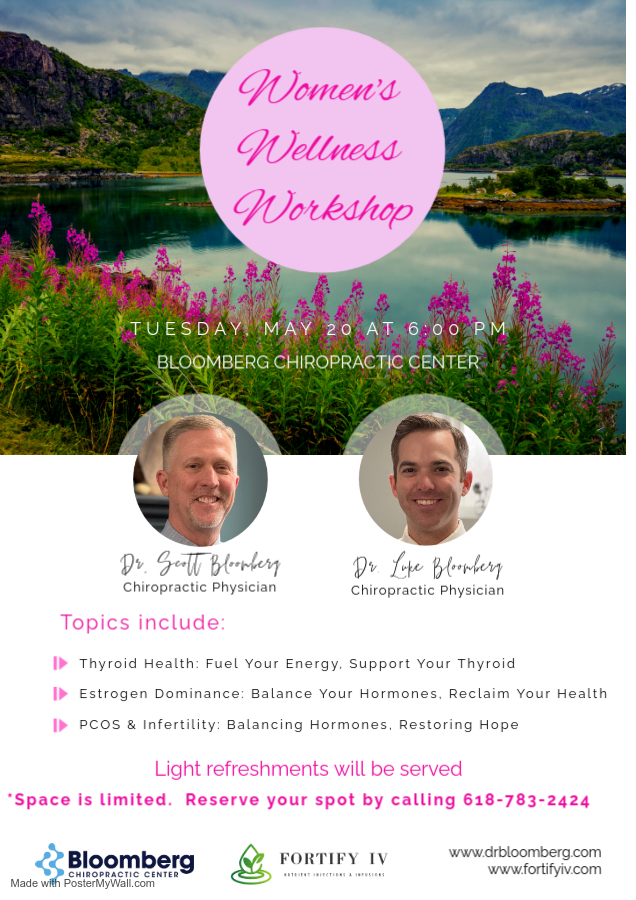
Join us for our Women’s Wellness Workshop on May 20 at 6:00pm. Space is limited, so reserve your
spot by calling 618-783-2424. You can also book a consultation by calling 618-783-2424 or 618-783-
3839.