When Energy Drops, Think Beyond Iron
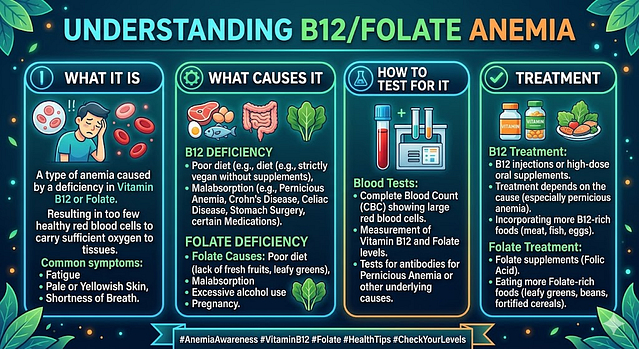
Most people associate anemia with iron deficiency. But in clinical practice, one of the most commonly missed causes of fatigue is low vitamin B12 or folate. These nutrients are essential for red blood cell formation, DNA synthesis, and brain/nerve function. Without them, your body may still produce blood cells—but they are large, inefficient, and short-lived, leading to poor oxygen delivery and low energy.










What Makes B12/Folate Anemia Different?
Unlike iron deficiency anemia (which produces small red blood cells), B12 and folate deficiencies cause macrocytic anemia (large red blood cells) These cells carry oxygen poorly, break down faster, and contribute to fatigue even when iron levels are normal.
Symptoms Patients Often Miss
This is where it gets interesting—and often overlooked. Neurological symptoms can appear before anemia is even detected in labs. Many patients don’t present with “classic anemia.” Instead, they report:
- Persistent fatigue
- Brain fog or memory issues
- Tingling or numbness in hands and feet
- Mood changes or irritability
- Balance issues or dizziness
- Pale or slightly yellow skin
Why Do Deficiencies Occur?
1. Poor Absorption (Most Common Cause)
Vitamin B12 absorption is a multi-step process that requires adequate stomach acid, intrinsic factor (produced in the stomach), and a healthy small intestine. Disruptions in this process include:
- Aging (declining stomach acid)
- Acid-blocking medications
- Metformin
- Gut inflammation or dysbiosis
2. Dietary Factors
- Vegan or vegetarian diets (low B12 intake)
- Poor overall nutrition
- Excess alcohol use
- Chronic illness
- Inflammation
- Stress
- Aging
The Folate–B12 Connection
These nutrients work together closely. Here’s the important nuance: Folate can mask a B12 deficiency in lab work, but it does not protect the nervous system. That means a patient may appear “normal” in labs while neurological damage is still progressing.
Testing: Looking Beyond “Normal”
Many patients are told their B12 is “within range”—but still have symptoms.
Key Markers to Evaluate
- Serum B12
- Folate
- Homocysteine (often elevated when deficient)
- Methylmalonic acid (MMA) – more specific for B12
Functional Insight
- B12 levels under ~400 can still be symptomatic
- Elevated homocysteine suggests impaired methylation
Treatment: A Functional Approach
Step 1: Address Absorption
- Support stomach acid
- Improve gut health
- Review medications
Step 2: Replenish Nutrients
Vitamin B12:
- Oral (methylcobalamin or hydroxocobalamin)
- Sublingual
- Intramuscular injections (especially effective for faster results)
Folate: Methylfolate (preferred in many cases)
Step 3: Support Methylation
- Vitamin B6
- Riboflavin (B2)
- Magnesium
This is often where patients notice improvements in:
- Energy
- Mental clarity
- Mood
A Clinical Insight
“If you’re tired, foggy, or dealing with tingling—and your labs say you’re ‘fine’—you might not be fine.” B12 deficiency is one of the few conditions where early signs are subtle, but long term consequences can be significant.
Who Should Be Tested?
- Adults over age 50
- Patients on acid blockers or Metformin
- Vegetarians or vegans
- Patients with fatigue and brain fog
- Individuals with numbness or neuropathy
- Those with digestive issues
Final Thought: This Is About More Than Anemia
Vitamin B12 and folate are not just about blood counts. These nutrients are central to brain health, nerve integrity, energy production, and long-term cognitive protection. When addressed properly, patients often say: “I feel like myself again.”
Call to Action
If you’re experiencing fatigue, brain fog, or nerve-related symptoms, it may be time to look beyond standard lab interpretations. At Bloomberg Chiropractic Center and Fortify IV, we focus on identifying and correcting the root causes of nutrient deficiencies. Give our office a call at 618-783-2424 with questions or to schedule your functional medicine consultation.